You are now leaving Centuria Australia
and entering Centuria New Zealand.

The 750ha macadamia orchard in NSW’s Northern Rivers region, Boombera Park, is a next generation plantation employing sustainable, natural farming practises to replace other macadamia farms nearing the end of their 40 to 60-year commercial life.
Boombera Park combines four varieties of macadamia species, which have been planted since 2019, and are coming into their maturity – meaning their optimal yield production. To foster the health and longevity of this new farm, sustainable land management practices, including regenerating corridors of native bushland to encourage native flora and fauna, have been employed.
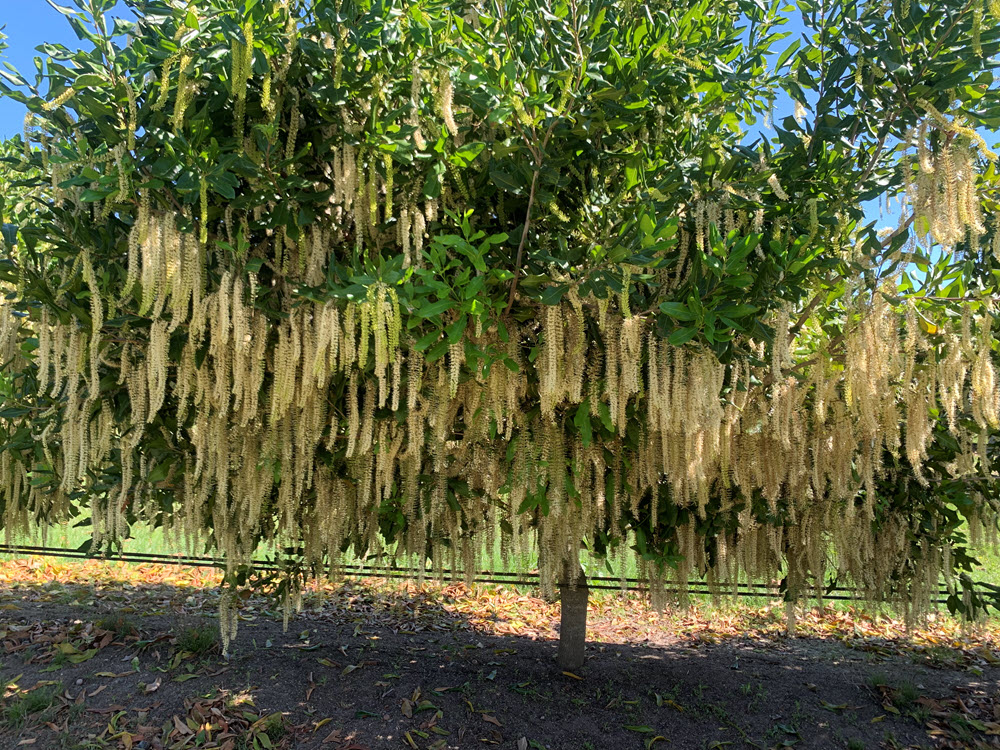
In particular, within these corridors native bee-friendly trees have been planted. Macadamia trees are not self-pollinating and, therefore, rely on bees for pollination to produce fruit (nuts).
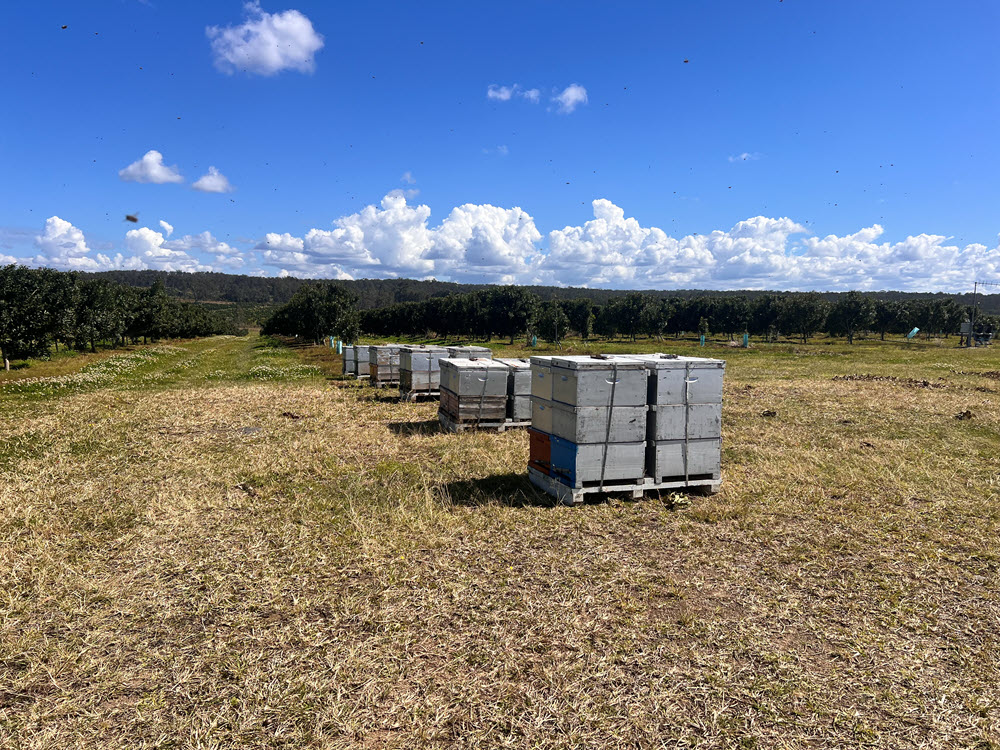
Boombera Park uses European honeybees for crop production through its managed hives in addition to benefitting from bushland that supports wild honeybees, native stingless bees and carpenter bees. The farm borders more than 590ha of natural bushland, with native tree species supplying supplementary forage for pollinators throughout the year.
At present, this natural pollination system is harvesting 400-450 tonnes of macadamia nuts per year. At maturity (10-30 years), the orchard is anticipated to deliver 2,750 tonnes annually. The commercial lifespan of macadamia trees is up to 60 years; however, the trees typically bear full commercial yields between c.10 years and c.40 years of age.
Andrew Tout, Centuria Head of Agriculture, said, “Boombera Park is part of approximately 28% of Australian macadamia orchards currently in the establishing phase, which is expected to help replace orchards that are due to decline in production. We estimate that approximately seven per cent of orchards in the mid-north NSW region will exceed 40 years of age within five to ten years, and that 23% are already over the 40 years old and still producing nuts; however, it is uncertain when these will cease commercially viable production.
“Macadamias are a long-duration crop, taking five to seven years to commence production and around a decade to reach full yield with trees capable of living and producing for 60 -100 years, but with declining economic performance over time.
“At present, the majority of macadamia orchards in the Northern Rivers region comprise trees more than 30 years old so the success of Boombera Park is critical to ensuring a consistent supply of nuts as older orchards begin to bear less produce. Being a younger property also enables Boombera Park to establish sustainable infrastructure.”
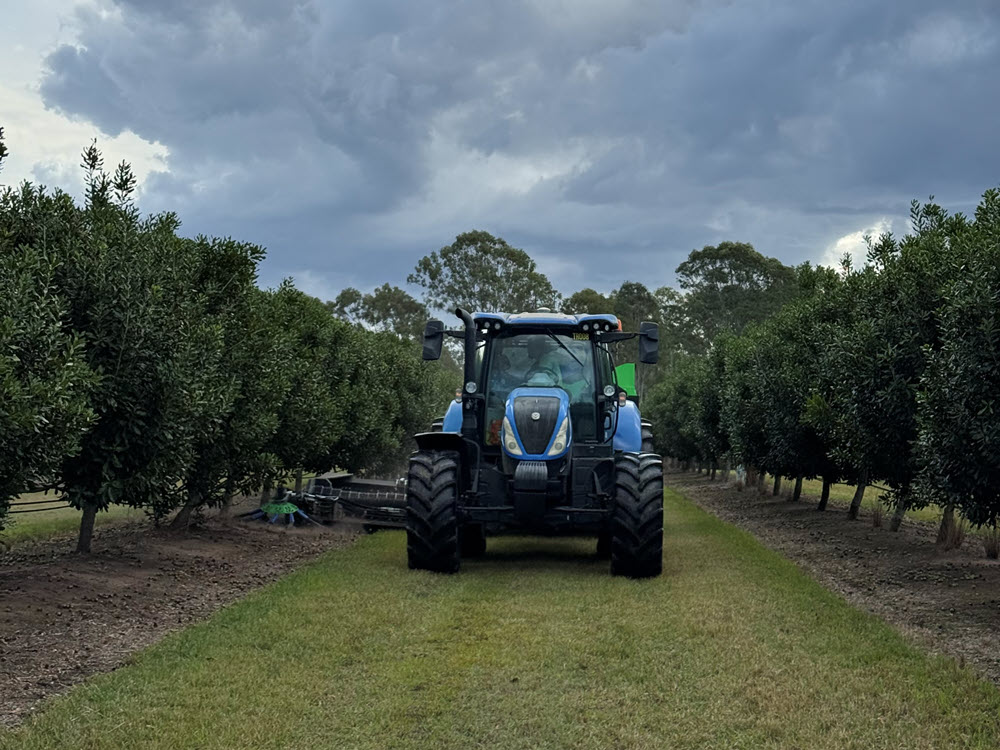
Boombera Park has been designed with large single variety blocks to improve operational efficiency, which reduces the need for frequent tractor turning during spraying, mowing and harvesting, resulting in lower fuel use and reduced soil compaction.
Onsite storage dams were built to capture rainfall runoff to maximise the amount of rainwater distributed to the trees. The dams provide “supplementary irrigation” system to easily move water from one area to another. Being a native species means macadamias have particular growing requirements such as subtropical climates with high rainfall and well-drained soil. At maturity, these trees consume 8-12 megalitres (ML) per hectare per year, which is less than almonds (10-12 ML/Ha) but more than pistachios (5-8 ML/ha).
Boombera Park’s sustainable pest management systems include the use of natural predators such as Trichogramma (Mactrix) wasps and lacewings; mowing every second row rather than all areas to preserve beneficial insects in the un-mowed rows; canopy management to reduce unwanted pest incidence; and the minimal use of broad-spectrum insecticides, with targeted applications only when necessary.
Boombera Park’s harvest process also involves waiting for nuts to fall naturally before harvesting instead of using chemical thinning and mechanical shaking of the trees.
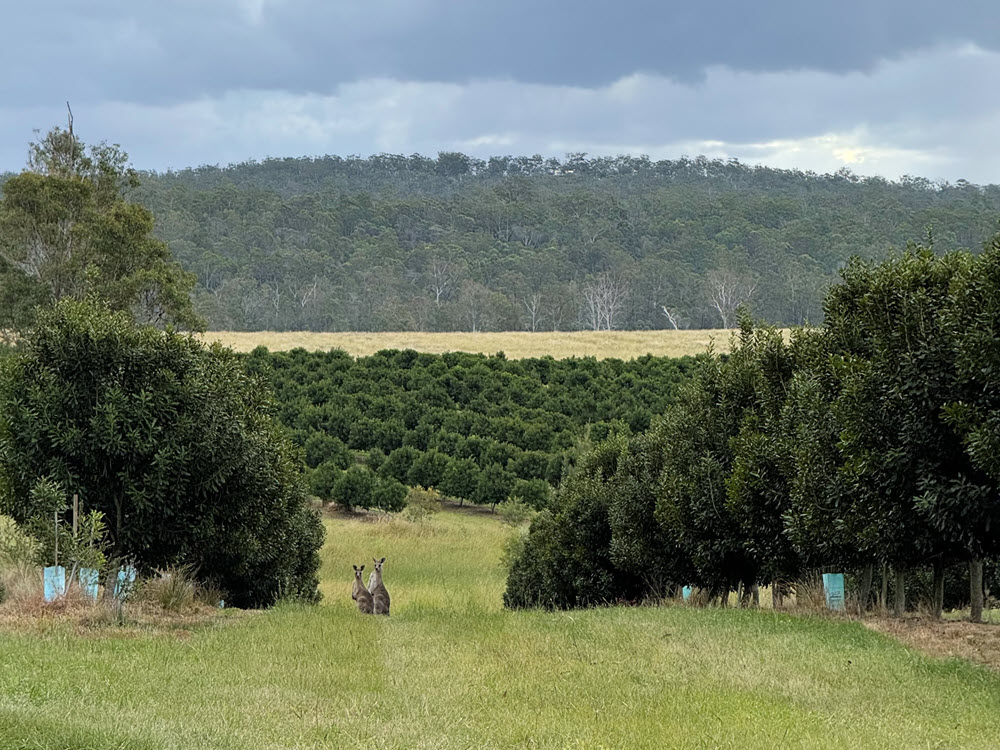
To protect natural fauna, the farm has installed koala crossings over an electric pig fence to allow safe movement of koalas.
Renewable onsite power is generated by a 29kW solar system, which produces approximately 44 – 52 MWh each year and supplies power to the onsite buildings and the farm’s irrigation system.
Mr Tout concluded, “From an ESG perspective, macadamias are well aligned to evolving investor and consumer expectations. As a perennial tree crop, macadamia orchards provide long-duration carbon sequestration and can contribute positively to soil structure and biodiversity when managed appropriately.
“Their long productive life – often extending over multiple decades – reduces the need for frequent replanting compared to annual cropping systems, supporting lower lifecycle land disturbance and more stable land use outcomes.”
Boombera Park is owned and managed by the Arrow Primary Infrastructure Fund (APIF), which is part of Centuria Capital Group.